Duke MQM Student Blog
4 Secrets of the MQM Team Experience
Joining the MQM program at Fuqua was like opening a mystery box — and inside that box? A new team, a new journey, and a new set of unforgettable experiences.

Published August 20, 2025

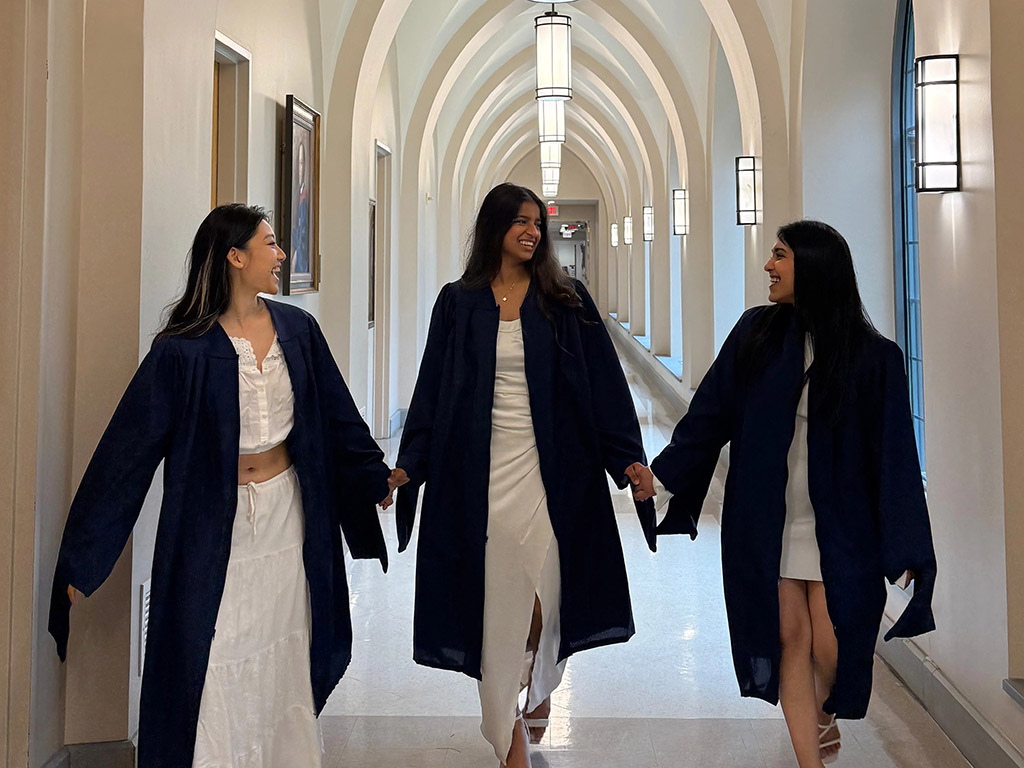
After the MQM commencement ceremony, I sat down to start working on this blog. Overwhelming feelings of both sadness and happiness surrounded me. My computer still has a file open titled “Cybersecurity Final Review,” but there are no more Monte Carlo simulations to run or capstone updates to prepare. My graduation gown was carelessly draped over the couch, and my teammate, also my best friend, was taking the first flight home the following morning.
It still doesn’t feel real.
Joining the MQM program at Fuqua was like opening a mystery box — and inside that box? A new team, a new journey, and a new set of unforgettable experiences. If you’re about to join MQM, here are four secrets about the team experience that you might not realize upfront, but you’ll definitely experience.
1. Your team will surprise you in great ways.
I don’t know how much deep learning Fuqua uses to randomize us, but the algorithm is wild. Twice throughout the program, students are paired with a completely new group of teammates.
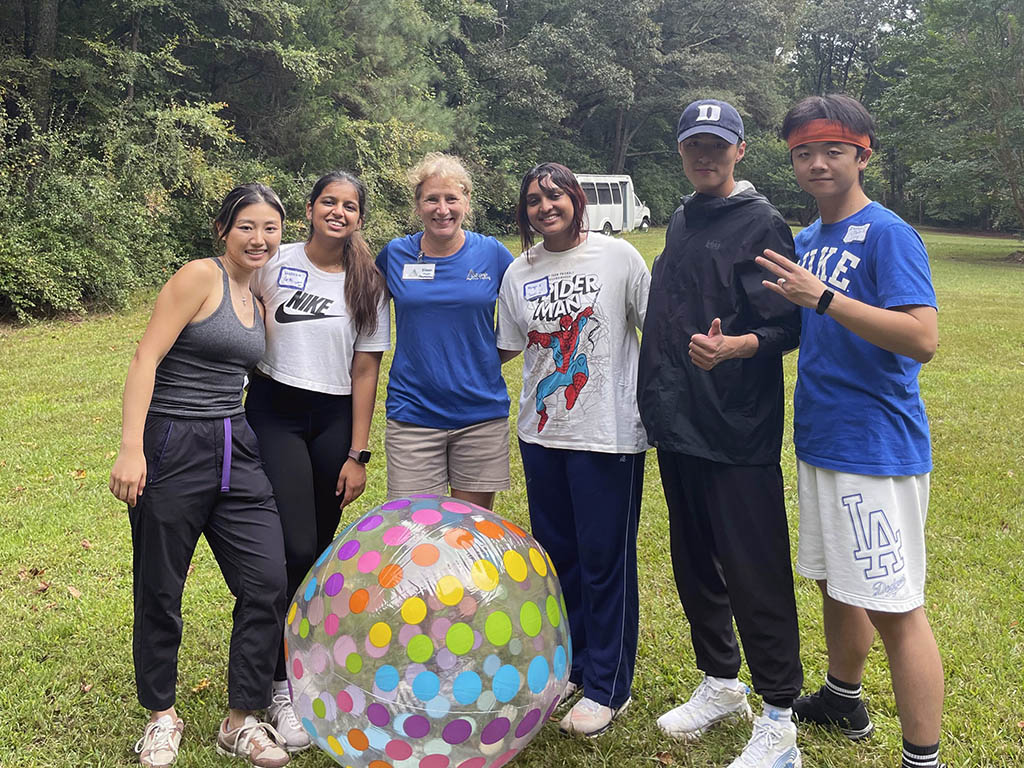
Before you even dive into academic work, Fuqua makes sure you get to build a friendship with your team. From scavenger hunts to Triangle Training, a few team lunches and too many bubble teas, it suddenly felt natural to tackle projects together — even the ones submitted at 11:59 p.m., just before the assignment deadline!
2. The work is tough, requiring everyone to contribute.
One of my favorite team moments was during our Capstone project with Duke Health. Our challenge was to wrangle messy, multi-state health data and turn it into something meaningful. None of us came from a clinical background, so we were completely beyond our depth.
We’d email Dr. Seidelman, a specialist in communicable diseases at Duke Health, nonstop asking, “Wait… what is this disease again?” We read paper after paper just trying to understand what we were even measuring. Someone casually mentioned, “Hey, maybe a Tableau dashboard would help us see the trends better?” The very next day, my teammate Jianjun showed up to a group meeting with a prototype. Suddenly, we could see everything — missing values, outliers, time-based patterns. It made our analysis more intuitive, and honestly, more fun.
Another favorite? Professor Jiaming Xu’s house price prediction case study competition. Using machine learning, teams competed to create the best model for accurate pricing. We placed second, but the real highlight was that one five-hour meeting, waiting for Daniel’s deep learning model to finish training. His laptop was barely hanging on, fans whirring like it was preparing for takeoff. But we didn’t waste that time. We shared stories from home, debated feature selection, and walked through our model—line by line. That night, I learned more than I did in any classroom. I started thinking more critically about model trade-offs (thanks, Daniel), picked up cleaner coding habits from Zhenhao, and never forgot Vanshika and Manya reminding us to bring everything back to the real-world impact. Why does this model matter? Who is it helping?
Those lessons stuck with me.

3. Conflicts will happen.
Deadlines, different work styles, and stress — it’s a recipe for friction. Our team had tough conversations and moments when things didn’t go smoothly. At first, we underestimated the difficulty of teamwork and delegating responsibilities. One night, we synced everyone’s work two hours ahead of our assignment deadline, and it required major revisions. Code showed errors, parameters had changed, and some new insights were found at the last minute.
We ended up splitting the work by tasking two teammates with debugging the code, and the rest of us worked on the rest. We had to sync up our work every ten minutes so that one of our teammates could adjust the format and be prepared to upload. We submitted the assignment just in time, at 11:59 p.m.
Those moments helped me grow. I learned to listen better, step up, and step back when needed.

4. When it’s all over, you will miss them.
Our team spent an entire year in shared Google Docs, frantic group chats, and way too many late-night Zoom calls. We cheered each other on during presentations, tried different cuisines during our potluck, and celebrated wins and survived losses in job hunting together.
And now it’s over.

It hits me at random moments, the silence of not having a team meeting, the urge to iMessage someone a dumb meme from class, or realizing no one’s around to debug Python code with me at 2 a.m.
If you’re about to start your MQM journey, treasure your team. Learn from them, laugh with them, and lean on them when you need to. One day, you’ll realize that your proudest moments didn’t just come from case wins or project presentations, but also the people you tackled it all with.
And that, I think, is Fuqua’s best-kept secret.
Related Content

A Deep Dive in Deep Learning
The Modern Analytics course has equipped me with the skills and confidence to approach demanding analytical tasks with a structured, data-driven mindset.

Practice Meets Passion: Exploring the Intersection of Data Analytics and Sports
The Fuqua Quantitative Management Programs Data Competition motivated us to find new applications for machine learning and data analysis in a field that we’re deeply passionate about: sports.
The Capstone Experience: Overcoming Adversity With My Amazing Team
As I reflect on my capstone experience, I'm grateful for the challenges we faced.