I came to Duke to layer business strategy on top of my design skills and be capable of creating the change I want to see in the world, but I quickly felt out of place.
By Ayan Bhandari Weekend Executive MBA Class of 2026
Published September 29, 2025
I came to Duke to layer business strategy on top of my design skills and to create the change I want to see in the world. As the only industrial designer in the program, it was easy to feel out of place. I tried to morph into something else, but I’ve come to understand the power of authenticity — not just for others, but for myself. It’s what’s allowing me to grow into the leader I’m meant to be, not the one I thought I should be, one that my newborn son can be proud of someday.
Like any great design, this journey is not a solo effort, it’s taken cross-disciplinary collaboration. At Fuqua, that starts with the cohort. So, here’s a glimpse into the path that finally made me stop holding back who I am and why you shouldn’t either.
“It ain’t about how hard you hit. It’s about how hard you can get hit and keep moving forward.” – Rocky Balboa
“F—k wasting time on an MBA.” Those were my thoughts as I attended a dinner with investors interested in learning about my startup in 2017. I was sitting at a table with a net worth of over $25 million dollars, and my skills as a designer got me there.
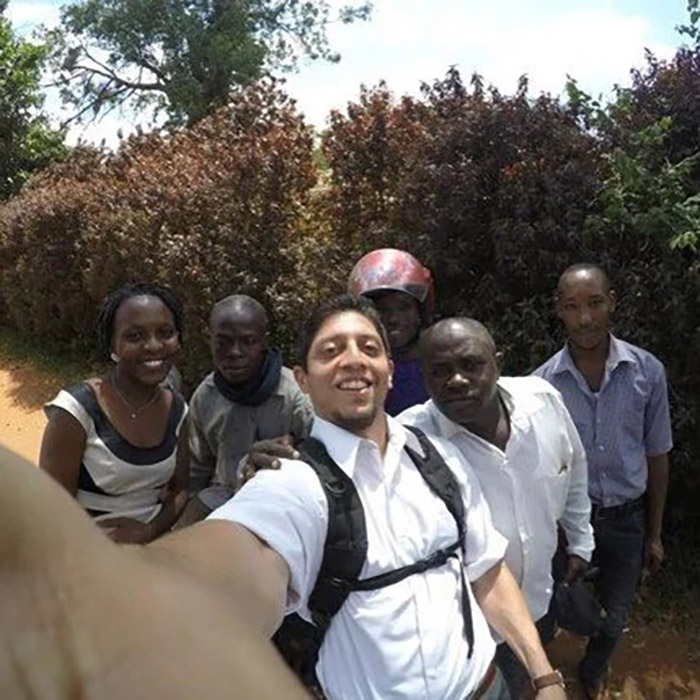
By this point, I had designed first-of-their-kind therapies, life-saving devices for rare childhood disorders, and been at the forefront of many women’s health products. Combine that with my Kenyan upbringing and my love for motorcycles, and I had the perfect experience to start nuway, a company providing safety solutions for motorcycle taxis that allowed women to travel safely in rural Africa. Why would I need an MBA? My design and development experience got me this far, and I felt like I had the skills to ride it out.
Three years later, in 2020, the burnout of being a newly married, solo founder with a full-time job during a global pandemic led to nuways shutdown. As I reflected on that time, I wasn’t disappointed about not building a business, but that I failed those women. If I were going to solve global problems successfully, then I needed a deeper understanding of operating a business. I had a reason to go for an MBA. Besides, I was so close to fulfilling the promise I made to myself all those years ago, and I couldn’t let this failure stop me.
“All we have to decide is what to do with the time that is given to us.” – Gandalf
Flash back to 2006, I was floundering through life as a freshman at Virginia Tech when a gunman killed 32 people, including someone in my life. I was shown how precious life can be, so I made a promise to myself to do something meaningful with my time. That’s when I discovered design. Industrial design makes technology human; it is the bridge between our imagination and our actions. When we need a tool to save a life or solve a problem, industrial design makes it intuitive. If I could become a skilled designer, then I could craft tomorrow’s solutions today.
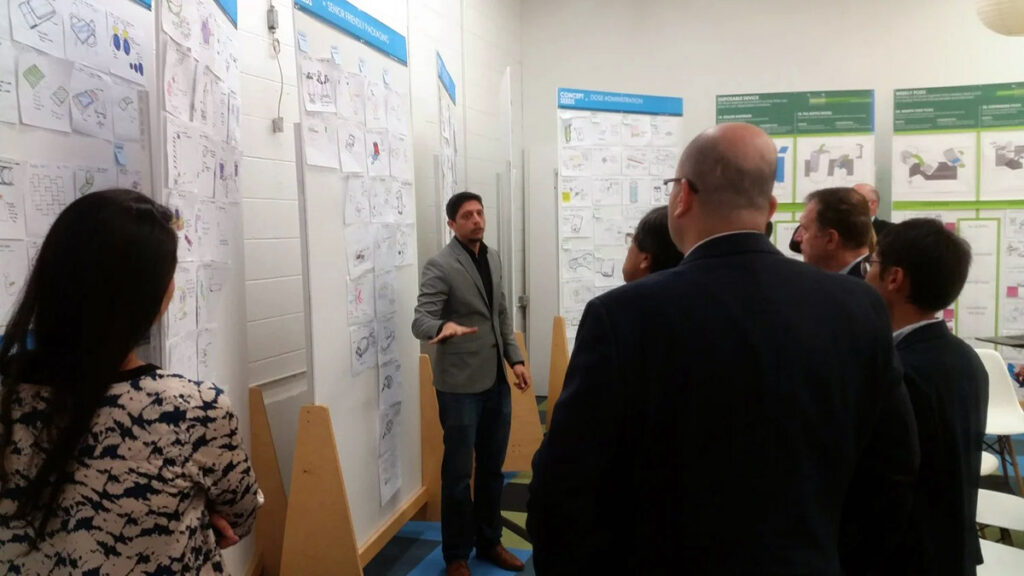
I started on the back foot with no design or creative skills. I dedicated all my time to perfecting all the hard and soft skills I could, and by the time I graduated, I was teaching an underground late-night sketch session for students trying to take it to the next level. Once I graduated, I got into medical product innovation, and I never looked back.
“A basketball team is like the five fingers on your hand. If you can get them all together, you have a fist. That’s how I want you to play.” – Coach K
Duke was the only school that believed my background as a designer would be valuable to the cohort, rather than a handicap. You would think that would give me confidence, but instead, phrases like “Fake it until you make it,” “imposter syndrome,” and “I got lucky” swirled around my mind when I arrived at the Weekend Executive MBA program. It wasn’t long before I came to learn this is how most of my cohort felt. So, then who does belong here?
The truth is, we have two options: we can be the people who believe we’re not good enough, or we can be the ones who take a look at the status quo and decide it isn’t equitable. Ultimately, we all had the courage to add more to our incredible amounts of responsibility to make an impact. I believe this type of personality is what’s key to this MBA. While our professors have been instrumental, the true education we receive is from each other. The diversity of opinion and the dialogue in the classroom is where the real gold comes from. Still, this revelation took me longer to understand than I would have liked.
“No one ever made a difference by being like everyone else.” – P.T. Barnum
Even with everything it took for me to get here, I still hesitated to be authentic. I was editing my comments before I spoke in fear of sounding stupid. I even prefaced most of my comments by saying, “I’m just a designer, but…” as if it would allow me grace if I didn’t understand something completely. Not only was I doing myself a disservice, but I was doing a disservice to my cohort. Then my son was born.
Kids watch everything. Not what you say, but what you do. That truth landed hard during a class discussion on the pink tax, which is the idea that women are charged more for the same products, or left with fewer choices, simply because they need them and will pay.
The conversation bounced all over the place. When it ended, I felt restless. Like something important had been missed. I had seen this up close, working with Fortune 50 companies on women’s health, watching breakthrough products get shelved. Not because they wouldn’t make money, but because they wouldn’t make enough. So, I spoke up. For the first time at Fuqua, I didn’t filter myself. I said what I meant. And after class, people came up to tell me it mattered.
I remember thinking, if my son had been in that room, this is what I’d want him to see. That moment changed something in me. I’ve been chasing that authenticity ever since.
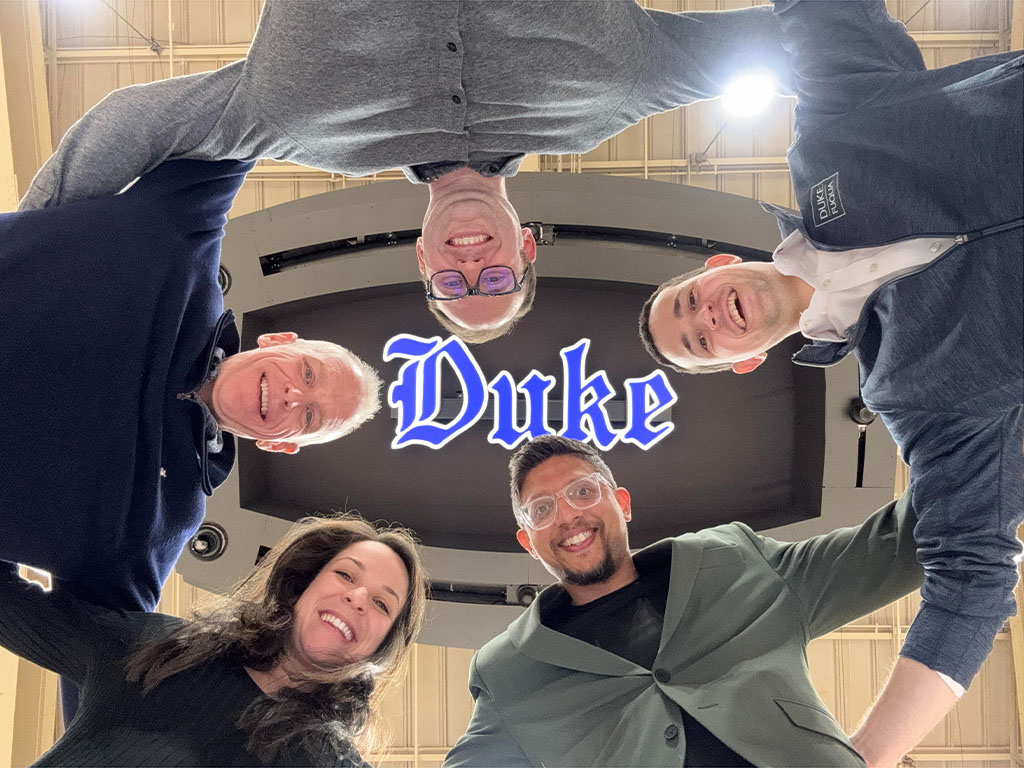
When I came to Fuqua, I believed that design was the opposite of an MBA. I realize now that they are two different approaches to creative problem solving. It is about having confidence in a vision and the ability to use hard and soft skills to showcase value to stakeholders, then making it all a reality. The beauty of pursuing my MBA at Duke is the Team Fuqua mentality. As students, we are put in situations where we must leverage a diverse set of perspectives in our teams and in the classroom.
I believe that experience will create strong, ethical leaders, but it won’t happen if we are holding back. When you authentically engage with your classmates, it changes the experience for everyone. So, I would like to ask my cohort: Help me keep my promise. Drop the fear, stop burning my tuition, and speak up, so I can actually learn something — because we will all be better because you did.
When I got accepted, I was happy but also unsure. I didn’t have all the answers, but I would soon learn that I didn’t need them to experience a big transformation.
Odds are, you or somebody you work with has ADHD, and a lack of understanding has probably led to lots of tension over the years. At least that’s been my experience.